
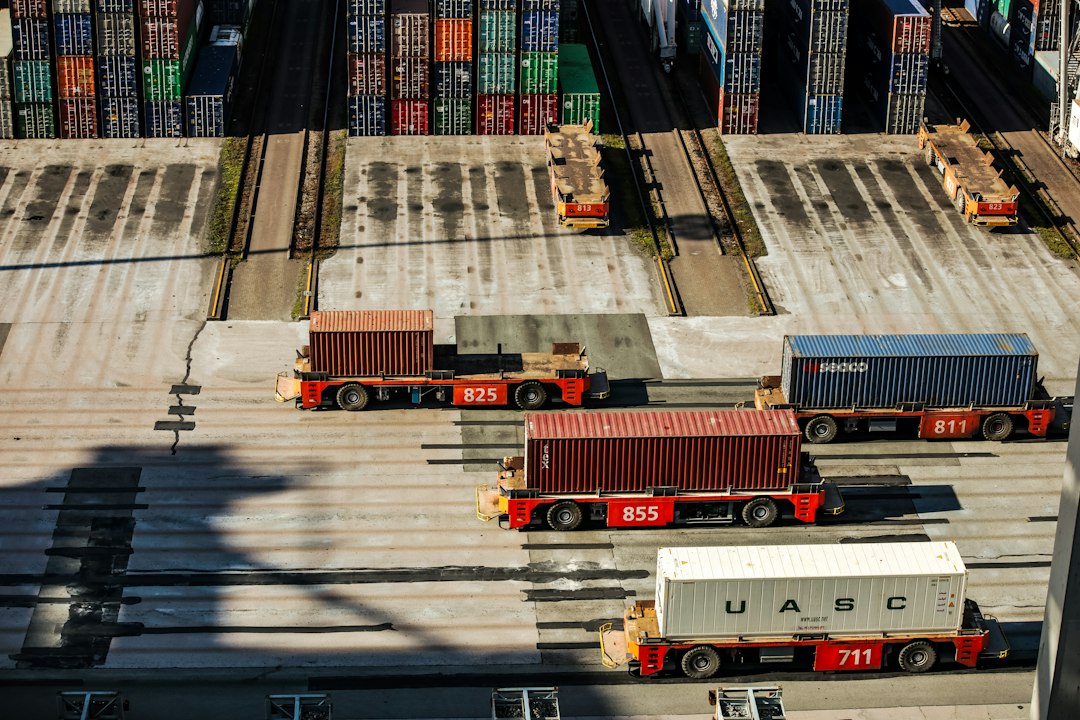
Why Shipping Container Tracking Matters
If you’ve ever watched a container disappear into a port or logistics hub and wondered exactly where it was — or whether it arrived at all — you’re not alone. Shipping containers move through some of the most complex, high-stakes supply chains in the world. Whether you’re managing a fleet of intermodal containers, running a small import/export business, or protecting a single high-value shipment, knowing where your cargo is at any given moment is no longer a luxury. It’s a practical necessity.
This guide is written for a broad audience: logistics managers overseeing dozens of containers, small business owners shipping goods across borders, and individuals moving valuable equipment or personal property. By the end, you’ll understand how GPS tracking works for shipping containers specifically, what features matter most, what realistic costs look like, and how to avoid the most common buying mistakes.
—
How GPS Tracking Works for Containers
At its core, a GPS tracker does three things: it determines location using signals from satellites, it transmits that location over a cellular network, and it delivers that data to a platform or app where you can view it.
The GPS satellites themselves — part of the Global Navigation Satellite System (GNSS) — orbit the Earth and broadcast signals continuously. A tracker receives those signals, calculates its position, and then uses a cellular or satellite data connection to push that information to a cloud-based platform. From there, you log in via a web browser or mobile app to see a live map, review trip history, set geofences, and receive alerts.
For shipping containers, update frequency is an important variable. Most trackers update every 30 to 60 seconds when the unit is active, though some real-time options refresh as fast as roughly every 10 seconds. Many container trackers use motion-triggered updates — the device wakes up and reports when it detects movement, then goes back into a low-power sleep mode while stationary. This balance between visibility and battery conservation is critical for assets that may sit in a yard for days or weeks between shipments.
Coverage is another key consideration. Domestic routes may work fine on a standard LTE cellular connection, but containers crossing international waters or moving through remote regions need a device with global SIM capability — sometimes supplemented by satellite communication when cellular networks are unavailable.
—
Types of GPS Trackers (and Which Fits Containers)
Understanding the three main device categories helps you choose the right tool for the job.
| Tracker Type | How It Installs | Power Source | Best For |
|---|---|---|---|
| OBD-II Plug-In | Plugs into OBD-II port in seconds | Vehicle power | Cars, vans, trucks with OBD port |
| Hardwired | Wired to vehicle power (15–30 min) | Vehicle power | Fleet vehicles, permanent installs |
| Battery-Powered Beacon | Magnetic mount or adhesive, no wiring | Internal battery | Containers, trailers, equipment, assets |
For shipping containers, the battery-powered beacon is almost always the right choice. Containers don’t have an OBD-II port, and hardwiring requires a power source that a standalone container simply doesn’t have. A rugged, self-contained battery tracker can be magnetically or mechanically secured to the container frame, hidden internally, or placed inside the cargo space itself.
Good container trackers are typically rated IP67 or better for dust and water resistance, built to handle extreme temperature ranges, and designed with multi-year battery life (under normal update schedules). If you’re tracking assets and equipment more broadly, the asset tracking and GPS for equipment and tools hubs on GeoTracking.com cover the full landscape. For rugged environments specifically, waterproof and rugged trackers is worth a look.
—
What to Look For in a Container GPS Tracker
Not all trackers are built for the demands of container logistics. Here are the features that matter most in this context.
Update Frequency and Motion Detection
A tracker that updates every 60 seconds in active transit gives you meaningful real-time visibility. But a container sitting in a port for two weeks doesn’t need constant updates — it needs a heartbeat check-in and an immediate alert if something moves unexpectedly. Look for configurable update intervals and smart motion-triggered reporting.
Battery Life
This is non-negotiable for container tracking. A device that lasts two to four weeks under frequent reporting may work for short-haul domestic routes. For long international transits, look for units that can sustain months of operation on conservative reporting schedules.
Coverage Area
If your containers move internationally, domestic-only LTE coverage won’t cut it. Global SIM coverage across many countries — or hybrid cellular/satellite units — is essential for ocean freight and cross-border routes.
Geofencing and Alerts
Geofencing lets you draw a virtual boundary around a port, warehouse, or destination. When the container enters or exits that zone, you receive an alert automatically. Tamper and shock alerts add another layer — if the container is opened unexpectedly or struck hard, you’ll know immediately.
Durability and Form Factor
Containers face harsh conditions: saltwater exposure, temperature swings from below freezing to extreme heat, vibration, and physical impact. The tracker needs to survive all of it. IP67 or IP68 ratings are a baseline; purpose-built container trackers often exceed this.
Platform and App Quality
A tracker is only as useful as its software. Look for a clean, intuitive dashboard with map views, trip history, downloadable reports, multi-user access, and configurable alert settings. A clunky interface makes data harder to act on, especially during a logistics emergency.
Contract and Subscription Terms
Some providers require annual contracts; others offer month-to-month flexibility. For seasonal shippers or one-off container moves, contract flexibility matters significantly. More on this in the cost section below.
—
How Much Does Container GPS Tracking Cost?
Pricing for container GPS tracking breaks into two components: hardware and subscription. Be cautious of any source quoting a single fixed price — actual costs vary based on quantity, coverage requirements, update frequency, and provider.
Hardware (one-time): Rugged battery-powered beacons suitable for containers typically range from around $50–$100 on the low end to several hundred dollars for enterprise-grade units with advanced sensors, longer battery life, or satellite capability. Buying in bulk usually reduces per-unit cost.
Subscription (recurring): Monthly subscription costs vary widely.
| Use Case | Typical Monthly Subscription Range |
|---|---|
| Single container / personal use | Low single digits to low double digits per device |
| Small fleet (a handful of containers) | Low-to-mid double digits per device |
| Enterprise / large-scale logistics | Custom pricing, often includes advanced analytics, alerts, integrations |
Some providers offer per-day or per-shipment billing — useful for infrequent shippers who don’t want to pay for a device sitting unused. Others lock you into annual plans; read the contract terms carefully.
Activation fees, SIM card fees, and overage charges for data-heavy update frequencies can add to the total. Always ask for a full cost breakdown before committing.
To understand subscription structures across provider types, the GPS tracker subscriptions explained guide lays out the trade-offs clearly.
—
Common Mistakes to Avoid
Even experienced logistics professionals make avoidable missteps when choosing container trackers. Here are the ones that come up most often.
Buying on price alone. The cheapest unit per device often comes with the thinnest battery life, weakest coverage, or a platform so basic it can’t generate useful reports. A tracker that saves money upfront but fails mid-transit costs far more in lost visibility and potential cargo issues.
Ignoring coverage gaps. A US-only tracker on a container going through a Mexican port, or aboard a vessel off the coast of Asia, will go dark. Confirm that the plan covers every geography your containers actually visit — not just where they start and end.
Underestimating battery drain. Setting a tracker to update every 30 seconds sounds great — until the battery dies after a week on a three-week ocean voyage. Match your update frequency to your route length and recharging schedule.
Missing the contract fine print. Auto-renewal clauses, early termination fees, and per-device minimums can lock you into costs you didn’t anticipate. If you ship containers seasonally or sporadically, a month-to-month plan is worth the slightly higher per-month rate.
Choosing a consumer-grade device for commercial use. Standard vehicle trackers or personal trackers aren’t built for the physical punishment of container shipping. Always match durability specs to the environment.
—
How to Choose the Right Container Tracker
The best tracker isn’t the one with the most features — it’s the one that fits your specific operation.
Start by mapping your use case. Ask yourself: Are these containers domestic only, or do they cross borders and oceans? How long are typical transit times? Do you need cargo-level data like door open/close, temperature, or shock detection? How many containers do you need to track, and how often?
Then compare options side by side across the criteria that matter most to you.
| Decision Factor | Questions to Ask |
|---|---|
| Coverage | Does the plan include all countries on my routes? |
| Battery Life | Will it last the full transit without recharging? |
| Update Frequency | Can I configure it for motion-triggered vs. constant updates? |
| Alerts | Does it support geofence, tamper, and shock alerts? |
| Platform | Is the software intuitive and does it export reports? |
| Contract Terms | Is it month-to-month or annual? Are there minimums? |
| Hardware Durability | Is it rated for outdoor, marine, and temperature extremes? |
For shippers who also track the trucks moving their containers, fleet tracking and fleet management solutions offer complementary tools — some enterprise platforms cover both vehicles and assets in a single dashboard. If your operation spans construction equipment, trailers, or rentals as well, asset recovery covers the recovery-specific angle worth knowing.
The logistics industry and transportation industry pages on GeoTracking.com also surface providers with experience in high-value freight and intermodal tracking.
—
FAQ
Can a GPS tracker work inside a sealed metal shipping container?
GPS signal can be partially blocked by thick metal walls, which is why placement matters. Many container trackers are designed to be mounted externally on the frame or near a door where signal penetration is better. Some units also use supplemental technologies like cellular multilateration or satellite communication to maintain location accuracy when GPS signal is weak.
How long do battery-powered container trackers last?
It depends heavily on update frequency and battery capacity. Under conservative settings — such as motion-triggered updates and periodic heartbeat check-ins — many units last several months. High-frequency updates drain batteries much faster. Always check the manufacturer’s battery estimate under your intended reporting schedule, not just the maximum rated life.
Do I need a separate plan for international container tracking?
Yes, in most cases. Domestic-only LTE plans won’t provide coverage in international waters or in countries outside the home network. Look for trackers with global SIM capability covering a broad range of countries, or hybrid units that can fall back to satellite when cellular is unavailable.
What’s the difference between GPS tracking and cargo monitoring?
GPS tracking gives you location. Cargo monitoring goes further — adding sensors for door open/close events, temperature and humidity, shock/tilt, and light detection (to identify unauthorized access). Some container tracking platforms combine both. If you’re shipping temperature-sensitive or high-value goods, cargo monitoring features may be worth the added cost.
Is container GPS tracking legal?
In most jurisdictions, tracking containers and cargo you own is entirely legal. However, regulations vary by country, and if you’re tracking containers on behalf of others, consent and disclosure requirements may apply. This is general information — consult a legal professional or relevant authority for guidance specific to your operation and geography.
What should I do if my tracked container stops updating?
First, check whether the device battery is depleted or whether the container has moved into an area without cellular coverage. Most platforms will flag a loss of signal and timestamp the last known location. If the container has deviated from its expected route or geofence before going dark, contact your carrier and, if warranted, relevant authorities immediately with the last known location data.
—
Finding the Right Fit for Your Containers
Shipping container tracking sits at the practical intersection of asset protection, logistics efficiency, and cargo visibility. Whether you’re managing a handful of boxes or coordinating dozens of containers across international supply chains, the right tracker and platform can shift you from reacting to problems to preventing them.
GeoTracking.com covers more than 50 trackers across fleet, asset, vehicle, personal, and pet use cases — comparing pricing, performance, usability, and fit honestly, with affiliate relationships always disclosed and no pay-for-placement influence on rankings. Tell it what you need to track, and it matches you to the options that actually fit your situation, with pricing ranges and trade-offs laid out plainly.
If container and asset tracking is what you’re after, Get Started to find your match in about 60 seconds — free, no sales calls, no pressure.
